


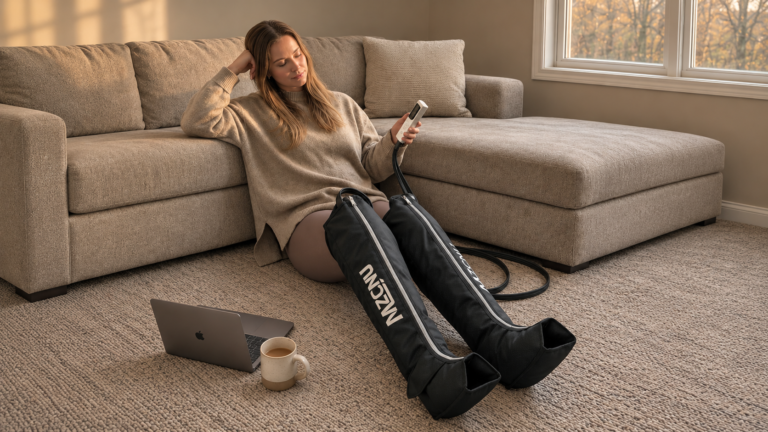
At a Glance
- The Problem: Post-workout soreness, sluggish circulation, and desk-bound stiffness aren’t just minor annoyances—they directly stall muscle repair and daily energy levels.
- The Science: Sequential pneumatic compression mimics the body’s natural muscle pump, accelerating venous return and clearing metabolic waste far faster than passive rest.
- What You’ll Learn: Inside, we break down the physiology behind heavy legs, compare recovery modalities using clinical performance benchmarks, and show how multi-chamber compression technology can cut your soreness window in half.
If you have ever finished a long run, a heavy squat session, or even a ten-hour shift on your feet, you know that distinct, leaden sensation in your calves and quads. For decades, the standard prescription for heavy legs was passive rest, a foam roller, and maybe an ice bath if you were feeling brave. While stretching and hydration still play a role in baseline wellness, sports science has shifted dramatically toward active vascular recovery—specifically, the use of a leg compression massager to mechanically flush fatigued tissue.
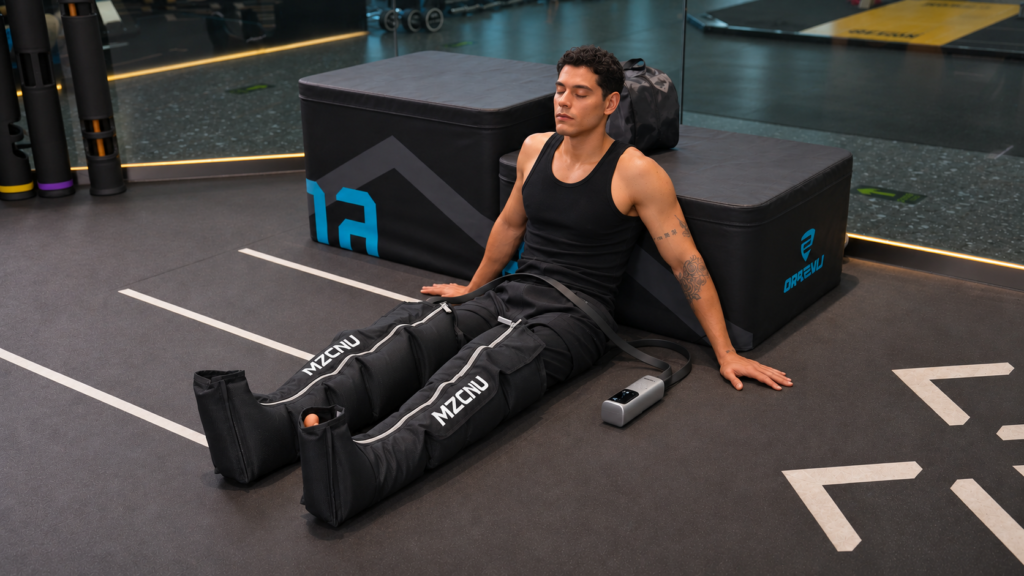
When you push your lower body, tiny micro-tears form in the muscle fibers, and metabolic byproducts like lactate and interstitial fluid accumulate in the surrounding tissues. Because gravity constantly pulls blood and lymph downward, your lower extremities have to work overtime to push deoxygenated blood back toward your heart. Devices like the MZCNU Leg Massager
solve this bottleneck by applying calibrated, rhythmic pressure that moves fluid upward, turning hours of sluggish recovery into a focused 20-minute session.
The Physiology of Stagnant Legs
To understand why compression works, it helps to look at how your circulatory system operates under stress. Your arteries have the heart pumping blood outward at high pressure, but your veins rely largely on one-way valves and skeletal muscle contractions to push blood back up. When you stop moving—whether you collapse onto the couch after a half-marathon or sit at a desk all afternoon—that muscular pump shuts off.
Fluid pools in the lower limbs, leading to localized swelling, stiffness, and delayed onset muscle soreness (DOMS). According to research published in the Journal of Strength and Conditioning Research, athletes who utilized intermittent pneumatic compression immediately following intense eccentric exercise experienced a 15% to 22% faster reduction in perceived muscle soreness at the 24-hour and 48-hour marks compared to passive recovery groups.
Even more compelling is the impact on range of motion. Swollen, fluid-logged fascia restricts joint mobility, altering your gait and increasing injury risk during your next workout. Choosing an advanced full-leg compression massager with multiple overlapping zones ensures there are no gaps in pressure, preventing fluid from getting trapped between the knee and the thigh.
Why Chamber Count Changes Everything
Not all compression gear delivers the same physiological result. Early consumer recovery boots relied on three or four large bladders that inflated all at once, essentially squeezing the leg like a blood pressure cuff. While better than nothing, broad-zone compression lacks precision.
Modern sequential systems divide the leg into distinct, overlapping zones—often up to 10 individual air chambers spanning from the sole of the foot to the upper thigh. Here is why that granular control matters for your recovery:
- True Distal-to-Proximal Gradient: Blood and lymphatic fluid must be moved upward in a continuous wave. Ten chambers allow the device to inflate sequentially—starting at the foot, moving to the ankle, lower calf, upper calf, knee, and thigh—creating a seamless milking action that prevents backflow.
- Targeted Joint Relief: The knee and ankle joints are notoriously prone to stiffness yet sensitive to excessive force. Multi-chamber architecture lets you dial down pressure over sensitive joints while maintaining firm, therapeutic pressure across dense muscle bellies like the gastrocnemius and quadriceps.
- Customizable Pressure Zones: If your calves are tight from hill sprints but your quads feel fine, a 10-chamber setup lets you isolate and customize intensity rather than subjecting your entire leg to a one-size-fits-all squeeze.
Comparing Common Lower-Body Recovery Methods
When building a sustainable wellness routine, time and consistency matter just as much as raw effectiveness. Below is how pneumatic compression stacks up against traditional recovery staples across key performance metrics:
| Recovery Method | Primary Mechanism | Optimal Session Time | Convenience & Consistency | Best Use Case |
| 10-Chamber Pneumatic Compression | Sequential venous & lymphatic drainage | 15–30 minutes | High (hands-free while reading or relaxing) | Post-workout flushing, daily circulation, travel swelling |
| Foam Rolling / Myofascial Release | Mechanical pressure on trigger points | 10–15 minutes | Moderate (requires physical effort and floor space) | Pre-workout mobility and localized knot release |
| Cold Water Immersion (Ice Bath) | Vasoconstriction and inflammation blunting | 8–12 minutes | Low (messy, uncomfortable, hard to maintain daily) | Acute tournament recovery between same-day events |
| Static Compression Socks | Constant low-grade passive pressure | 4–8 hours | High (wearable under clothes) | Long-haul flights and prolonged standing shifts |
Notice the distinction in effort. Foam rolling works well before a workout to wake up stiff tissue, but asking an exhausted runner to hold a plank position over a dense cylinder for twenty minutes rarely happens consistently. Hands-free pneumatic boots remove that friction, making daily recovery effortless.
Integrating Compression Into Your Weekly Routine
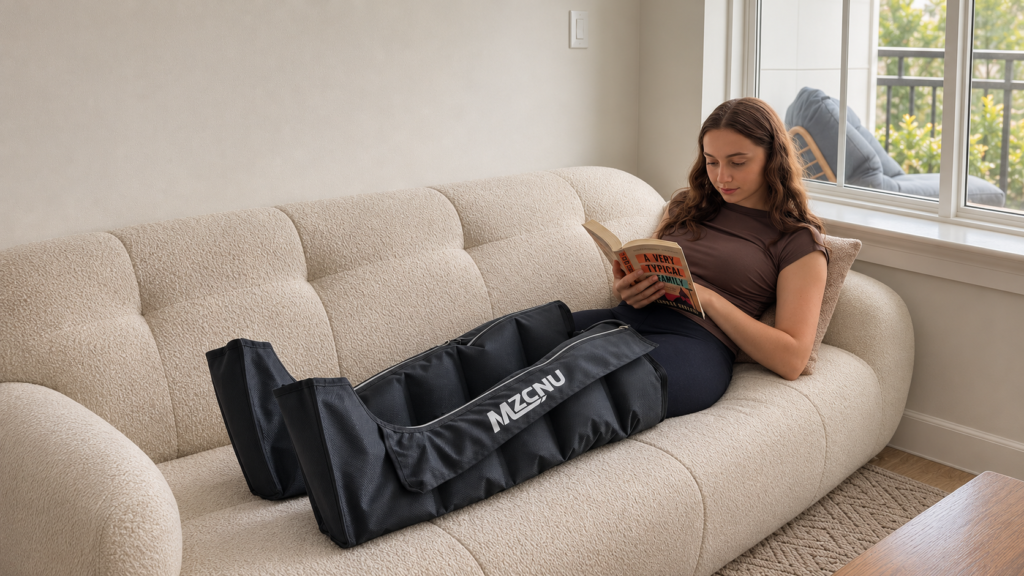
You do not need to be training for an Ironman to benefit from structured vascular recovery. In fact, some of the sharpest improvements show up in everyday active adults balancing workouts with sedentary jobs.
1. Post-Training Flush (Within 60 Minutes of Exercise) After heavy leg days, cycling sessions, or long runs, spend 20 minutes at a moderate pressure setting (roughly 80–120 mmHg, depending on your tolerance). Keeping the pressure comfortable rather than painful is critical; squeezing too hard can actually collapse superficial capillaries instead of encouraging smooth venous return.
2. The Evening Desk Reset Sitting for eight hours bends the hip and knee joints at 90-degree angles, kinking vascular pathways and slowing lower-leg circulation by up to 50%. Running a gentle 15-minute cycle in the evening clears out daytime fluid retention, leaving your legs noticeably lighter before bed and improving sleep quality.
3. Pre-Workout Warm-Up Priming A short, 10-minute session at low pressure before dynamic stretching increases local blood flow and tissue temperature without burning valuable energy reserves. Think of it as an effortless wake-up call for stiff ankles and calves.
What to Look for Before You Buy
If you are investing in home recovery hardware, look past flashy marketing and focus on three engineering fundamentals:
- Overlapping Chamber Design: Ensure the internal air bladders overlap like roof shingles. Without overlap, small gaps form between chambers where fluid can pool instead of moving upward.
- Adjustable Pressure & Modes: Your legs feel different after a 5K tempo run than they do after a heavy deadlift session. Look for wide pressure ranges (typically 40 to 150 mmHg) and multiple inflation sequences—such as single-chamber peristaltic waves versus full-leg hold cycles.
- Ergonomic Fit and Zipper Durability: Recovery gear only works if you actually use it. Smooth, heavy-duty zippers and breathable, wipe-clean interior linings keep setup under thirty seconds and prevent sweat buildup over months of regular use.
Making Recovery Non-Negotiable
Fitness gains do not happen while you are lifting weights or logging miles; they happen during the hours afterward when your body repairs damaged fibers and replenishes depleted energy stores. Treating recovery with the same intentionality as your training changes how you feel week after week. By combining smart hydration, quality sleep, and targeted sequential compression, you stop dragging heavy, fatigued legs into your next session—and start showing up ready to perform.

0 Comments