


Upgrading municipal water treatment plants, expanding transportation terminals, and reconfiguring high-rise commercial structures present formidable engineering challenges when existing reinforced concrete must be altered. Mature civil infrastructure relies on monolithic structural foundations, thick retaining walls, and heavily reinforced bridge decks that cannot tolerate uncontrolled mechanical shock or arbitrary structural breaching. When civil engineers and general contractors introduce new high-capacity piping networks, install seismic retrofitting anchors, or remove obsolete structural components, maintaining the integrity of adjacent load-bearing elements is paramount. Achieving these demanding architectural and mechanical modifications requires engineered precision, non-impact separation techniques, and strict adherence to environmental containment protocols throughout every phase of execution.
Creating exact cylindrical penetrations through dense aggregate, thick shear walls, and deep concrete foundations is a critical requirement for routing large-diameter utility mains, fire suppression risers, and structural post-tensioning ducts. Contracting specialized diamond drilling services provides engineering teams with high-torque hydraulic and electric core rigs capable of extracting clean, smooth-walled concrete cores at virtually any angle—vertical, horizontal, or inverted. Industrial diamond-impregnated core bits slice effortlessly through high-PSI concrete and heavy Grade 60 steel rebar without generating concussive vibrations or micro-fissures that could compromise surrounding structural connections. Integrated water-cooling channels continuously lubricate the cutting matrix while binding airborne silica particles at the point of generation, ensuring strict compliance with OSHA crystalline silica exposure limits and maintaining clean air quality within sensitive, occupied environments.
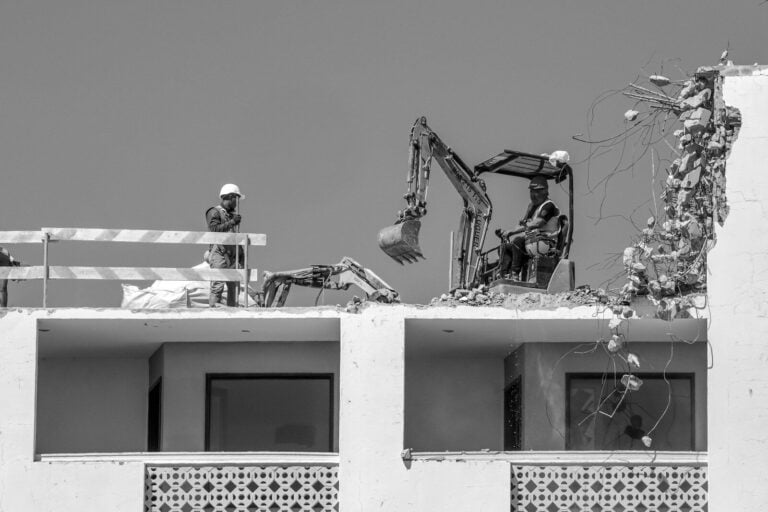
When facility expansions or structural rehabilitations call for dismantling obsolete concrete vaults, removing massive equipment plinths, or opening large structural bays, integrating a professional concrete demolition service ensures heavy structural removal proceeds with surgical control. Modern selective demolition replaces legacy pneumatic jackhammers and wrecking balls with remote-controlled electric robotic breakers, hydraulic concrete crushers, and continuous diamond wire saws. Hydraulic crushing jaws silently fracture thick reinforced walls without transmitting destructive shockwaves through building frames, while zero-emission electric machinery eliminates exhaust fumes inside underground tunnels, active hospitals, and enclosed manufacturing facilities. Operators maintain safe standoff distances via wireless controls, systematically reducing large concrete masses into manageable debris sections for rapid, clean removal.
Before initiating core extraction or robotic structural dismantling, comprehensive subsurface verification forms the foundation of job site risk management. Certified non-destructive testing technicians deploy high-frequency Ground Penetrating Radar and photographic radiographic imaging to map hidden internal elements across target concrete surfaces. Subsurface diagnostics pinpoint exact rebar spacing, post-tensioned tendon trajectories, and live electrical or fiber-optic conduits, allowing field crews to mark verified safe-work boundaries directly onto the concrete. Cross-referencing real-time internal structural maps with high-precision diamond tooling eliminates accidental utility strikes, prevents catastrophic tendon release, and protects field personnel from concealed hazards.
Ultimately, executing complex structural modifications across modern commercial and civil infrastructure requires replacing brute-force methods with engineered diamond tooling and controlled robotic dismantling. Partnering with experienced technical specialists who combine high-capacity core drilling fleets, zero-emission demolition units, non-destructive radar scanning, and closed-loop slurry vacuum containment guarantees that critical infrastructure upgrades meet strict ACI building standards, uphold environmental regulations, and finish safely on schedule.

0 Comments