


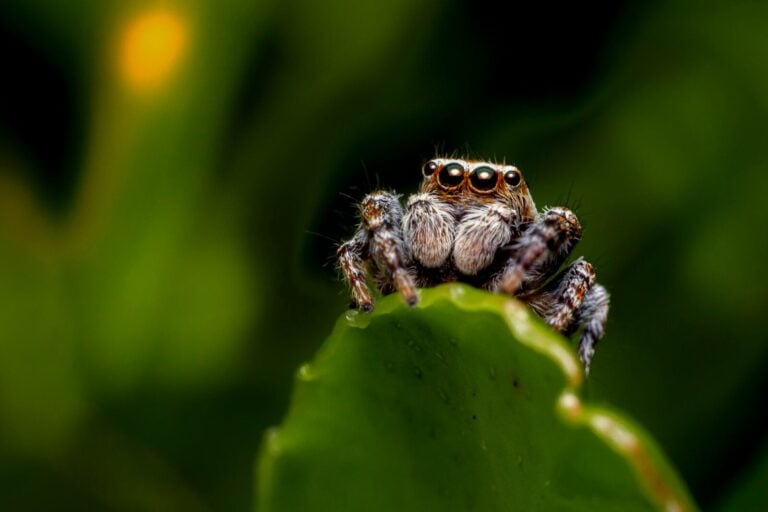
Jumping spiders are among the most fascinating predators in the insect world, and their diet reflects exactly that. Understanding what does the jumping spider eat reveals a creature that is far more capable and adaptable than its small size suggests.
These spiders are predominantly carnivorous, hunting live prey actively rather than relying on webs to do the work for them. They are opportunistic feeders that will take on insects significantly larger than themselves, making them effective hunters in almost any environment they occupy.
Whether you are curious about wild jumping spiders or caring for one as a pet, knowing what they eat and how they feed is essential to understanding their biology and behavior.
What Does the Jumping Spider Eat in the Wild?
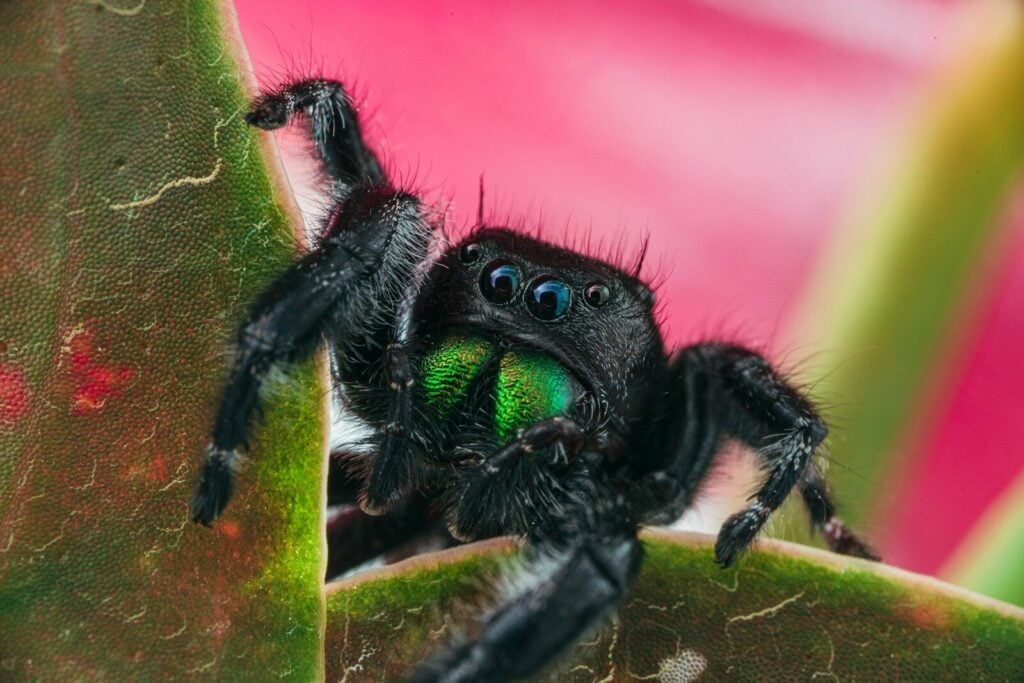
Wild jumping spiders eat almost any insect unfortunate enough to cross their path. They are constantly on the move, scanning their environment with their remarkable eyesight and pouncing on whatever prey presents itself.
Their natural diet in the wild includes:
- Flies, particularly house flies and small field flies, which are their preferred prey due to constant movement
- Crickets, katydids, and grasshoppers that they can overpower with their strong front legs
- Moths and butterflies, which they stalk and leap onto from a distance
- Cockroaches and roach nymphs, soft-bodied and easy to subdue
- Other spiders, including members of their own species in some cases
Jumping spiders have also been observed eating bees, wasps, worms, mealworms, and even small crustaceans like isopods and springtails depending on habitat. They are highly opportunistic and will attempt prey that other spiders of their size would not bother pursuing.
One fascinating exception exists in the species Bagheera kiplingi, which feeds primarily on Beltian bodies, specialized protein and fat-rich structures found on acacia plants, making it one of the only predominantly plant-eating spiders known to science.
Nectar: The Surprising Plant Component
Most people assume all spiders are strict carnivores. Jumping spiders break that assumption. Multiple species regularly consume nectar from flowers and extrafloral nectaries on plants such as the partridge pea.
This nectar consumption technically classifies jumping spiders as omnivores rather than obligate carnivores, though insects still make up the overwhelming majority of their caloric intake.
The plant benefits from this relationship too, as jumping spiders prey on whatever pests they encounter while feeding at the plant’s nectar sources.
How Does It Catch It?
Unlike most spiders, jumping spiders do not spin webs to trap prey. They are active, visual hunters that stalk their targets the way a cat stalks a mouse, low to the surface, patient, and deliberate.
Their hunting process follows a consistent sequence:
- The spider spots moving prey using its large forward-facing eyes, which provide exceptional depth perception and near 360-degree field of vision
- It orients its body toward the target and begins a slow, calculated stalk
- Before leaping, it spools out a silk dragline attached to a solid surface, which acts as a safety line if the jump misses
- It launches itself onto the prey and delivers a venomous bite that quickly incapacitates the victim
Movement is the critical trigger. Jumping spiders rely almost entirely on motion to identify prey, which is why live insects are essential for captive specimens. Dead insects are typically ignored because without movement the spider’s hunting instinct is not activated.
Despite their small size, rarely exceeding one inch in body length, jumping spiders will attack prey many times their own size. They can successfully take down crickets that dwarf them, using their powerful front legs to hold prey immobile while the venom takes effect.
What Does the Jumping Spider Eat in Captivity?
Captive jumping spiders thrive on a diet that mimics their natural prey as closely as possible. The guiding principle is straightforward: always use live insects and never offer prey larger than the spider’s own body length.
The best feeder insects for jumping spiders include:
- Fruit flies: The ideal food for slings and juveniles; soft, harmless, and they move enough to trigger natural hunting behavior reliably; both melanogaster and hydei varieties are used depending on spider size
- Small crickets: Good nutrition for juveniles and adults but must be appropriately sized; large crickets can bite and injure the spider
- Dubia roach nymphs: One of the most nutritious options available; soft-bodied, easy to catch, and well tolerated by most species
- Houseflies and bottle flies: Excellent for adults and mimic natural prey very effectively
- Moths: Occasional treats that generate visible excitement in captive spiders due to their fluttering movement
Mealworms and waxworms should be used sparingly as rare treats only. Mealworms have hard bodies and strong jaws that can injure a spider during feeding, and waxworms are excessively fatty if fed regularly.
Feeding Frequency by Life Stage
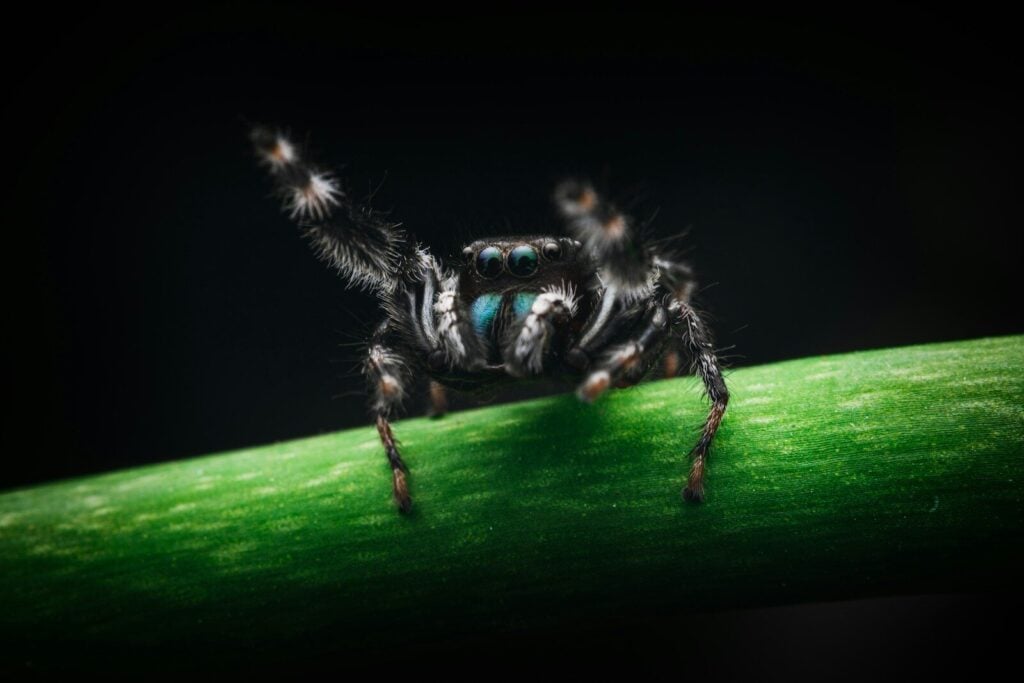
How often a jumping spider needs to eat changes significantly as it grows. Overfeeding and underfeeding both cause problems, so matching the feeding schedule to the spider’s life stage matters.
Slings (baby spiders) need to eat every day or every other day. Their bodies are tiny, their stomachs hold little, and their growth rate is rapid. Small fruit flies are the appropriate prey at this stage.
Juveniles do well on a feeding schedule of every two to three days. They can handle slightly larger prey as their size increases, transitioning from fruit flies toward small crickets and roach nymphs.
Adults eat less frequently because their growth has slowed considerably. Most adult jumping spiders feed every five to seven days, and some adults, particularly females after egg laying or spiders kept in cooler temperatures, may eat as infrequently as once per week.
A plump abdomen signals the spider is well fed and does not need food immediately. A visibly flat abdomen or unusual activity near the front of the enclosure typically indicates hunger.
Hydration: Often Overlooked
Food is only part of the picture. Jumping spiders need fresh water access regularly, but they do not drink from standing water bowls the way mammals do.
The correct method is to lightly mist one side of the enclosure every two to three days. The spider drinks droplets from the enclosure walls, plant leaves, or decorations. This mimics how they encounter water in the wild, as dew and raindrops on vegetation.
Avoid soaking the entire enclosure. Excessive moisture promotes mold growth and can cause respiratory issues for the spider. One lightly misted wall that dries within a few hours strikes the right balance.
Prey Size: The Most Important Safety Rule
The single most important rule when feeding a jumping spider is prey size. No feeder insect should be larger than the spider’s own body. Prey that is too large creates genuine danger.
A cricket or roach that the spider cannot quickly subdue will turn defensive and can bite the spider, causing injury or death. This risk is highest during molting, when the spider is completely vulnerable and should not have any live prey in the enclosure at all.
After placing prey in the enclosure, watch for a few minutes. If the spider shows no interest, remove the insect promptly. Leaving prey to wander unsupervised stresses the spider and creates ongoing injury risk between feedings.
What Jumping Spiders Will Not Eat
Knowing what does the jumping spider eat also means knowing what it refuses. Dead insects are almost universally ignored because the absence of movement removes the hunting trigger.
Some keepers use feeding tongs to wiggle dead prey and simulate movement, which occasionally works with individuals that have learned to associate the keeper with food, but live prey is always preferable.
Jumping spiders also show little interest in plant matter beyond the occasional nectar sip. They will not eat seeds, fruits, or prepared foods. Attempting to feed non-insect foods consistently leads to nutritional deficiency and a declining spider.
Conclusion
What does the jumping spider eat comes down to a simple answer: live insects, varied and appropriately sized, offered on a schedule that matches the spider’s age and activity level.
In the wild, jumping spiders are versatile, opportunistic predators that eat flies, crickets, moths, other spiders, and occasionally nectar. In captivity, replicating that variety with fruit flies, roach nymphs, and small crickets gives a pet jumping spider everything it needs to stay healthy, active, and behaviorally engaged.
These are animals that hunt by instinct and vision. Respecting that instinct by offering live prey, removing uneaten insects promptly, and maintaining a consistent hydration routine is the foundation of good care for one of the most charming and capable small predators on the planet.

0 Comments