


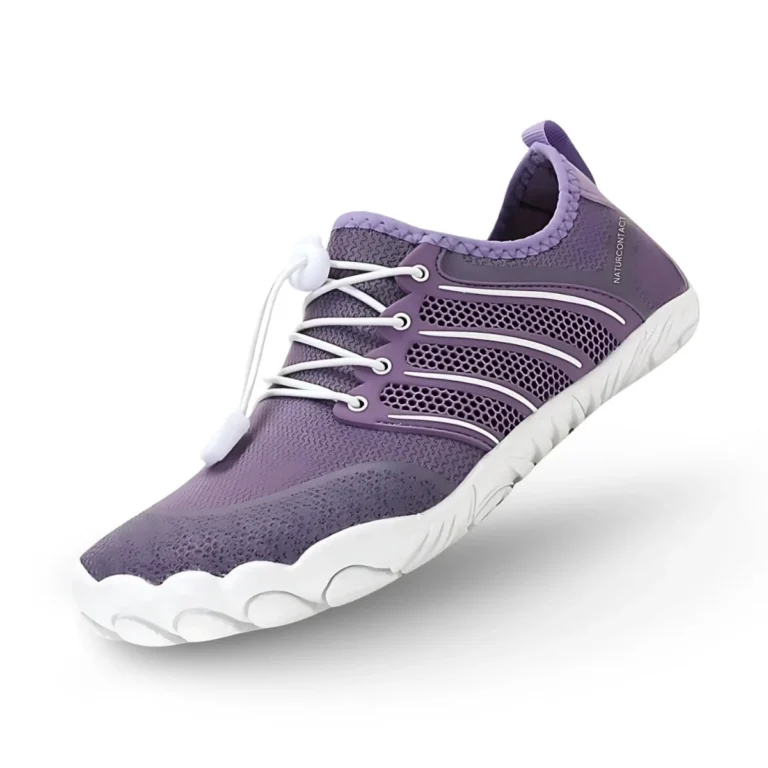
The way we walk has changed dramatically over the past few centuries. Modern footwear, with its thick soles, arch supports and raised heels, has progressively altered the natural biomechanics of the human foot. Barefoot shoes emerged as a response to this drift, with the goal of giving the foot back the freedom of movement and ground connection that characterized human locomotion before the advent of heavily structured footwear.
The principle behind minimalist footwear
The core concept is straightforward: the less a shoe interferes with the natural function of the foot, the better the foot performs. Barefoot shoes are designed to simulate as closely as possible the sensation of walking or running unshod, while offering minimal protection from the ground surface.
The characteristics that define a true barefoot shoe are precise and verifiable. The sole must be thin and flexible, capable of bending in any direction and transmitting proprioceptive feedback from the ground to the foot. The drop, meaning the height difference between heel and forefoot, must be zero or close to it: no heel elevation that alters the natural angle of the ankle. The upper must be wide enough to allow the toes to splay freely during ground contact, without squeezing or compressing them.
These characteristics, seemingly simple, represent a radical departure from conventional footwear design.
Documented benefits and those still under discussion
Scientific research on barefoot shoes and minimalist running has grown significantly over the past fifteen years, producing a body of evidence that deserves an honest reading.
The most solidly documented benefits concern the strengthening of the intrinsic foot musculature. Walking and running in minimalist footwear activates muscles that in traditional shoes remain largely inactive, because the shoe’s structure substitutes their work. Over time, this leads to stronger, more stable feet that are less dependent on the artificial support of a shoe.
Improved proprioception is another recognized benefit. The foot’s ability to receive and interpret information from the ground improves with thin soles, with positive effects on balance and overall motor coordination.
More debated is the question of injuries. Some studies suggest that transitioning to barefoot shoes reduces certain types of injuries typical of cushioned footwear, such as knee problems related to heel strike. Others highlight an increase in foot and calf injuries among runners who transition too quickly without an adequate adaptation period.
The transition: the most delicate phase
This is probably the most underestimated aspect for those who approach barefoot shoes with enthusiasm but without preparation. An adult foot that has worn traditional shoes its entire life needs time to adapt to a radically different way of functioning.
The intrinsic musculature is weak and undertrained. Tendons and ligaments are not accustomed to the specific demands of minimalist locomotion. The movement pattern itself must be re-educated: someone who has always run with a heel strike needs to learn to modify their gait, a process that requires weeks or months of conscious practice.
The general rule is to start with short sessions, gradually increase usage time, alternate barefoot shoes with traditional footwear in the early stages, and pay close attention to the body’s signals. Persistent pain in the calf, Achilles tendon or plantar fascia is a sign that the progression rate is too fast.
Not just for running: everyday use
Barefoot shoes have long since moved beyond the niche of minimalism-minded runners. Today there are models designed for every context: walking shoes for daily use, trekking models for trails, smarter versions for professional settings, minimalist sandals for summer.
This diversification has opened the market to a much wider audience, including not just athletes but also people who simply want footwear that is more respectful of foot physiology for everyday activities. Those who stand for many hours at work, those who suffer from posture-related back pain, those seeking a way to keep their feet stronger and more mobile over time: all of them find a potentially relevant answer in barefoot shoes.
A growing market with a solid community
The barefoot shoes segment has grown through an interesting dynamic: not driven by mass retail or large advertising campaigns, but by a community of convinced users that expanded through word of mouth, blogs, forums and online groups. This informed and loyal user base has created qualified demand that today supports an ecosystem of specialist brands with increasingly mature propositions in terms of design, materials and performance.

0 Comments