


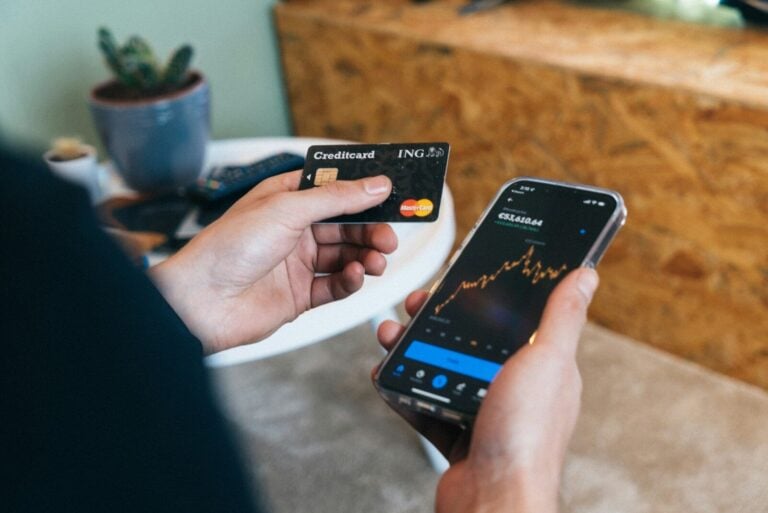
A search for “buy crypto no kyc credit card” can make buying cryptocurrency and spending it sound like the same transaction. They aren’t. An existing credit card can fund a crypto purchase through a seller that accepts it. A crypto-funded virtual card works in the opposite direction: cryptocurrency already owned becomes a card balance for ordinary purchases.
That distinction matters for creators whose income and expenses travel through different systems. A video editor might receive crypto from an overseas client while paying for editing software, cloud storage, and groceries through card checkout. Buying more crypto wouldn’t solve that problem.
The useful starting point is the direction the money needs to move.
Before: Defining what “buy crypto no kyc credit card” means
The purchase route versus the spending route
For someone starting with a conventional credit card, the goal is a purchase: dollars become cryptocurrency. The exchange or payment provider needs to accept that card, support the desired asset, and make its verification requirements clear before payment.
Credit-card crypto purchases almost always require identity verification. Chargeback risk and banking rules help explain why. Some purchasing guides report limited no-verification options in 2026, but those routes can involve higher fees, tighter limits, and more effort than a standard exchange purchase. A headline promising document-free access doesn’t establish what happens at checkout.
For a freelancer already holding crypto, “buy crypto no kyc credit card” usually points toward a different need: converting some existing income into spending money. A funded virtual card can serve that purpose without extending credit or purchasing additional cryptocurrency.
Direct crypto checkout is another option when the merchant supports it. That avoids adding a card-loading step, although the seller’s payment instructions, supported network, and refund process still need attention.
A decision list before submitting payment details
- If the starting balance is available credit and the goal is owning crypto, then an exchange-based purchase is the relevant route.
- If the creator already holds crypto and the merchant requires card details, then a crypto-funded card is the relevant comparison.
- If the merchant accepts the cryptocurrency already held, then direct crypto checkout deserves consideration before adding another service.
- If the main goal is avoiding identity-document uploads, then the actual signup requirements matter more than an “anonymous” label.
- If the purchase is a recurring business expense, then renewal support, balance management, and payment records belong in the decision.
This sorting step prevents a common mistake: entering credit-card details into a service that doesn’t provide the transaction the creator needs. It also narrows the comparison. An exchange purchase fee and a card top-up fee pay for different operations, so treating them as competing prices can be misleading.
Document-free signup doesn’t establish anonymity
A no KYC crypto card may offer standard signup without identity documents. That describes an onboarding process, not the disappearance of payment records.
An email address connects activity to an account. Crypto funding creates transaction records, while card purchases generate records within the payment system and at the merchant. An online order may also include a delivery address. Adding the card to a mobile wallet doesn’t erase those separate records.
For creators managing public profiles, the practical privacy goal is often narrower: keeping business purchases organized and limiting unnecessary document sharing. Calling a product an anonymous crypto card doesn’t prove it can conceal someone’s identity across the entire payment chain.
The useful comparison is which information each step requires and records, rather than which provider makes the strongest anonymity claim.
During: Moving creator income into a usable payment balance
Turning a “buy crypto no kyc credit card” search into a funding plan
Consider an illustrative workflow: an independent editor receives crypto for a completed project, keeps part of the payment in a wallet, and allocates the portion needed for upcoming operating expenses. The card is a spending tool within that workflow, not the destination for every dollar earned.
Before transferring funds, the editor checks the supported asset, network, destination address, minimum load, and fee shown for the transaction. A familiar coin name isn’t enough; the selected network must also match the receiving instructions.
Alongside exchange purchasing and direct merchant checkout, WaldenPay’s crypto-funded virtual cards illustrate the spending route: standard signup requires only an email, funding supports 135+ cryptocurrencies across 35+ networks, and cryptocurrency converts to card balance at loading time. The table separates that option’s published costs from routes where the seller’s quote determines the price.
| Route or step | Cost or limit | Timing to check |
|---|---|---|
| Credit-card crypto purchase | Seller’s purchase quote and limits | Verification and crypto delivery |
| Example virtual card creation | $10 one-time fee; $0 monthly | Issued instantly after funding |
| Example card loading | $50 minimum; 5% to 3% top-up fee | Conversion at loading time |
| Example crypto payment request | $1-$10,000; payer covers 0.2% | Payment completion before use |
| Direct merchant crypto checkout | Merchant’s checkout quote | Seller’s confirmation process |
For anyone comparing “buy crypto no kyc credit card” results, the important question is which row applies. Buying cryptocurrency, collecting a client payment, and loading a card aren’t interchangeable actions.
Receiving payment without sending improvised instructions
A creator can receive crypto directly into a compatible wallet, but payment requests offer another workflow when the invoice is denominated in dollars. They can also reduce the back-and-forth over which amount a client should send.
WaldenPay’s Collect Payments feature, for example, creates a fixed USD request from $1 to $10,000 with a description. The creator shares a link or QR code, and the client can pay in a supported cryptocurrency without opening an account. The creator receives the requested USD amount in the account wallet; the payer covers a 0.2% conversion fee.
Underpayments are tracked with a fresh address for the remainder, and incomplete payments are automatically refunded to the payer’s wallet. Those details matter for crypto payments for creators because an invoice shouldn’t become an informal troubleshooting thread.
Receiving the payment and loading a card remain separate steps with separate costs.
Matching loading costs to the actual expense schedule
The example card’s top-up fee starts at 5%, with automatic discounts based on rolling 30-day card spend. It falls to 4.75% from $2,000, 4.5% from $5,000, 4.25% from $10,000, and 4% from $25,000. Higher spending tiers reach 3.5% from $50,000 and 3% from $100,000.
Those thresholds describe spending, not merely deposits. A creator shouldn’t load extra funds assuming that the larger deposit alone earns a lower rate. Nor does unnecessary spending become economical just because it advances a discount tier.
A useful “buy crypto no kyc credit card” comparison therefore starts with the current fee, the one-time issue charge, and the actual software or shopping budget. The lowest advertised percentage is less relevant when the account’s spending doesn’t qualify for it.
After: Checking whether the “buy crypto no kyc credit card” route works in practice
From issued card to software renewal and everyday checkout
Once the card has a funded balance, the creator can use its details for online purchases or add it to Apple Pay or Google Pay for mobile-wallet spending. Cryptocurrency has already converted at loading time; the software merchant isn’t receiving the original coins.
A sensible first purchase is an ordinary planned expense rather than an urgent campaign launch. That gives the creator a chance to check the billing details, transaction record, and remaining balance before relying on the card for time-sensitive work.
Subscriptions need ongoing attention. A successful initial payment doesn’t maintain the balance required for the next renewal. Someone paying for editing software and cloud storage should record the renewal dates and compare upcoming charges with available funds.
For advertising accounts, the platform’s accepted payment methods and billing requirements deserve a separate check. A functioning card doesn’t replace the platform’s own account review or business-verification process.
Keeping a trail from client invoice to business expense
The transaction chain should remain understandable after the project is delivered. A creator needs to distinguish the client payment, any movement into a spending balance, the card-loading fee, and the final merchant purchase. Combining them into a single note labeled “crypto” makes later reconciliation unnecessarily difficult.
Useful records include the invoice description, payment status, funding confirmation, card transaction, and merchant receipt. The aim isn’t to save every screen indefinitely; it’s to retain enough detail to connect income and expenses without reconstructing the entire project from chat messages.
This is where “buy crypto no kyc credit card” searches can distract from the operational task. Less paperwork at signup doesn’t mean less need for accurate business records.
Privacy also depends on ordinary account habits. A dedicated business email, strong account credentials, and careful checking of payment links help keep the creator’s financial workflow separate from public-facing social activity. None makes a recorded payment untraceable.
The next-provider checklist
Before choosing or changing a service, a US-based creator should confirm residency eligibility, standard signup requirements, supported funding networks, and the amount that will become spendable after loading. Refund handling, account access, and recurring-payment suitability also belong on that list.
Published operating details provide another useful checkpoint. The example platform is operated by BlueHouse Software B.V. in Rotterdam, Netherlands, through a licensed partner model. A named operator offers something concrete to investigate; an anonymous promotional account doesn’t provide the same starting point.
For a more focused comparison, WaldenPay’s no-KYC crypto card guide offers a provider-screening checklist for assessing card options beyond their signup headline. It belongs alongside the provider’s current pricing and account requirements, rather than replacing those checks.
The best fit follows the creator’s actual money flow: an exchange for acquiring crypto, direct checkout where suitable, or a funded card for expenses that need conventional payment details.
Next time a “buy crypto no kyc credit card” result looks promising, the creator should check the direction of the transaction, the information requested, the current loading cost, and the records the payment will leave before committing funds.

0 Comments