


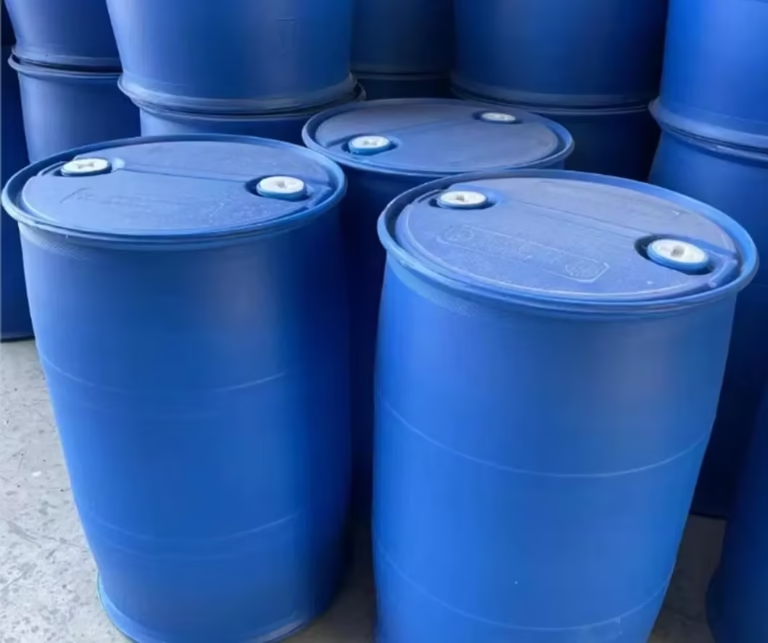
In the high-stakes world of industrial manufacturing, the humble storage container is often the unsung hero. Whether it’s a heavy-duty steel drum holding raw chemicals or a lightweight fiber drum transporting dry pharmaceuticals, these vessels keep the global supply chain moving. But what happens when they’re empty? For decades, the “one and done” mentality dominated the industry, leading to massive landfill waste and skyrocketing procurement costs. Today, the tide is turning toward a circular economy—a system where waste is designed out, and materials are kept in use for as long as possible.
Leading this charge in the Mid-Atlantic region is Kelly Drums, a specialist in the pickup, recycling, reconditioning, and destruction of steel, poly, and fiber drums, IBC totes, and Gaylord boxes. By partnering with an expert service like Kelly Drums, industrial clients can do more than just clear out warehouse space; they maintain strict regulatory compliance, manage hazardous materials responsibly, and support sustainable, environmentally responsible disposal practices that resonate with modern ESG (Environmental, Social, and Governance) goals.
Understanding the Lifecycle of Industrial Containers
To appreciate the value of recycling, we have to look at the sheer scale of industrial packaging. Every year, millions of containers are produced. Manufacturing a single new steel drum requires significant energy, raw iron ore, and water, while producing plastic (poly) drums relies heavily on petroleum-based resins.
The recycling process disrupts this linear “extract-make-waste” model. Here is how the different materials are handled in a professional recycling ecosystem:
- Steel Drums: These are the workhorses of the industry. Because steel can be recycled indefinitely without losing its structural integrity, an old drum can be cleaned, straightened, and repainted to become a reconditioned drums unit that performs just as well as a new one.
- Poly (Plastic) Drums: Often used for corrosive materials, high-density polyethylene (HDPE) containers like the 55 gallon poly drum are durable but difficult to dispose of if left to traditional waste streams. Professional recyclers can shred unusable plastic to create new raw materials for products like drainage pipes or plastic lumber.
- IBC Totes: Intermediate Bulk Containers (IBCs) are massive space-savers. When they reach the end of their life, the steel cages are recycled, and the inner plastic bottles are either thoroughly cleaned (rebottled) or recycled into new plastic components.
- Fiber Drums and Gaylord Boxes: While these are often seen as “lighter” options, their recycling is just as vital. High-quality corrugated cardboard and fiberboard can be pulped and repurposed, keeping tons of paper waste out of regional landfills.
The Hidden Benefits of Professional Reconditioning
When people hear “recycled,” they sometimes think “second-rate.” In the industrial container world, nothing could be further from the truth. Professional reconditioning is a rigorous, highly regulated process. A drum doesn’t just get a quick rinse; it undergoes a multi-stage transformation.
For steel containers, this often involves high-temperature “burning” to remove residues, followed by shot-blasting to clean the metal to a molecular level. Then comes the pressure testing. Every drum must be leak-tested to ensure it meets UN and DOT standards. If a drum doesn’t pass, it’s sent to a scrap melter to be reborn as new steel. This level of scrutiny ensures that when a company buys reconditioned packaging, they aren’t just saving money—they are getting a certified, safe product.+1
Navigating the Regulatory Minefield
If you’re managing a facility in Pennsylvania, Maryland, or Delaware, you know that the EPA and state-level environmental agencies don’t take “improper disposal” lightly. The “Cradle-to-Grave” responsibility—a core tenet of the Resource Conservation and Recovery Act (RCRA)—means that the original generator of the waste is responsible for its safe disposal, even after it leaves their property.
This is where a specialized waste management partner becomes an insurance policy for your business. Managing “RCRA Empty” standards is a technical task. For example, a container is only considered empty if all material has been removed using common practices (pouring, pumping, or aspirating) and no more than an inch of residue remains. For certain hazardous materials, the rules are even stricter.
By utilizing professional pickup and destruction services, manufacturers get more than just a clean floor; they get a paper trail. Certificates of destruction and recycling logs are essential for audits, providing proof that hazardous residues were handled by licensed professionals and that the containers themselves didn’t end up being sold illegally or dumped in a way that creates future liability.
The Environmental Impact: By the Numbers
The environmental argument for recycling industrial containers is backed by hard data. Consider these facts about the sustainability of the process:
| Material | Energy Savings (Recycled vs. Virgin) | CO2 Reduction |
| Steel | 60–75% | Up to 70% |
| Plastics (HDPE) | 80–90% | Up to 60% |
| Fiber/Cardboard | 40–60% | Significant Methane Reduction |
Beyond the carbon footprint, there is the issue of water. Companies like Kelly Drums often implement advanced water treatment systems to clean their containers, reusing water in a closed-loop system that prevents industrial runoff from entering local waterways like the Delaware River or the Chesapeake Bay.
Sustainability as a Competitive Advantage
In 2026, sustainability is no longer just a “nice-to-have” marketing slogan; it’s a requirement for doing business with major global corporations. Supply chain transparency is at an all-time high. If you are a mid-sized chemical manufacturer, your customers want to know that you are minimizing waste.
Integrating reconditioned containers into your logistics doesn’t just lower your overhead—it improves your brand’s reputation. It shows that your company is a responsible steward of resources. Furthermore, the cost savings are substantial. Reconditioned drums can cost 30% to 50% less than brand-new containers, allowing businesses to reallocate those funds toward innovation or workforce development.
Choosing the Right Partner in the Mid-Atlantic
Waste management is inherently local. You need a partner who understands the specific logistics of the Mid-Atlantic corridor—someone who can handle the dense traffic of the I-95 corridor while providing timely, reliable pickups.
When vetting a container recycling service, ask the following questions:
- Do they handle multiple materials? A “one-stop shop” that takes steel, poly, and fiber drums along with Gaylord boxes simplifies your operations.
- Are they compliant? Ensure they follow all DOT and EPA regulations for the transport and cleaning of hazardous materials.
- What is their “zero-waste” policy? Ideally, you want a partner who ensures that even the scrap—the metal that can’t be saved or the plastic that’s too damaged—is diverted from landfills and sent to primary recyclers.
Moving Toward a Greener Bottom Line
The transition to sustainable waste management doesn’t have to happen overnight, but it does need to be intentional. By moving away from disposable containers and embracing a reconditioning and recycling model, industrial leaders are finding that they can protect the environment without sacrificing the bottom line. It’s a rare “win-win” in the industrial sector: lower costs, less risk, and a cleaner planet for the next generation.
Whether you are looking to source high-quality reconditioned packaging or need a reliable team to haul away your empty inventory, the solution lies in professional partnerships. The future of the industry isn’t just about what we make; it’s about how we manage what we leave behind.

0 Comments