


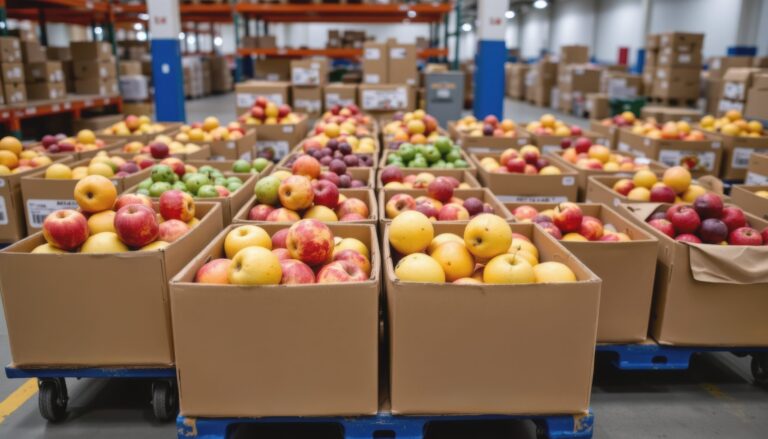
The Warehouse Is the Grocery Supply Chain’s Critical Nerve Center
Grocery fulfillment has shifted from routine restocking to real-time orchestration of highly perishable, volatile SKUs. As customer expectations harden around availability, freshness, and speed, warehouse operations must evolve from static support to active competitive advantage. This isn’t just about adopting technology. It’s about reconfiguring processes, people, and data around smarter throughput. Strategic warehouse optimization is how modern grocers hit sustainability targets, defend margins, and confidently scale.
Fragmented Infrastructure Undercuts Resilience
Many grocery warehouses were built for weekly cycles, not daily variability. These facilities often lack the software intelligence and automation muscle to adapt dynamically. Picking processes rely heavily on human labor, leading to inconsistent performance, rising turnover, and degraded accuracy. Errors increase risk—especially in mixed-temperature environments where incorrect handling can lead to shrinkage, contamination, or waste. This is where purpose-built grocery logistics systems begin to separate high-performing operations from those constantly playing catch-up.
More critically, these gaps compound across daily volume spikes. If a single SKU misses its chill-time threshold or if zone-specific dwell times are exceeded, the loss isn’t isolated to the product. It reverberates across compliance metrics, transport planning, and shelf availability. Without embedded system intelligence, operators are forced to triage rather than prevent.
The Impact of Macro Trends on Operational Design
Labor volatility, inflationary pressure, and omnichannel grocery models create structural demands that legacy infrastructure can’t meet. Retailers are recalibrating footprints—downsizing in some areas while building out micro-fulfillment and dark store capabilities elsewhere. Warehouse managers need infrastructure that supports both agility and discipline. Systems must scale volume without introducing operational noise. The ability to manage peak volumes, SKU volatility, and refrigeration requirements simultaneously has become a top priority in grocery retail logistics.
The emphasis on SKU breadth and speed has only heightened this tension. With grocers now balancing long-tail inventory with same-day fulfillment demands, zone-based picking, automated replenishment, and temperature-specific flow control are no longer luxuries—they’re foundational.
Automation as Infrastructure—Not an Add-On
Modern automation isn’t about eliminating labor; it’s about reassigning value. High-throughput technologies like shuttle systems, automated lifts, and goods-to-person systems enable stable output even during labor shortages. Grocery facilities use automation to eliminate excess travel, reduce time in ambient air, and maintain temperature integrity in every workflow segment.
Well-integrated controls and sensors also support ESG objectives—reducing spoilage, minimizing energy waste, and enabling predictive maintenance. Energy usage in cold storage can drop by 15–20% when automated conveyors and shuttles optimize thermal cycling and eliminate unnecessary dwell time.
Any operation aiming to modernize without disruption requires a foundational understanding of warehouse automation. When approached holistically, automation creates a throughput backbone that supports ergonomic gains, improves staff retention, and boosts compliance.
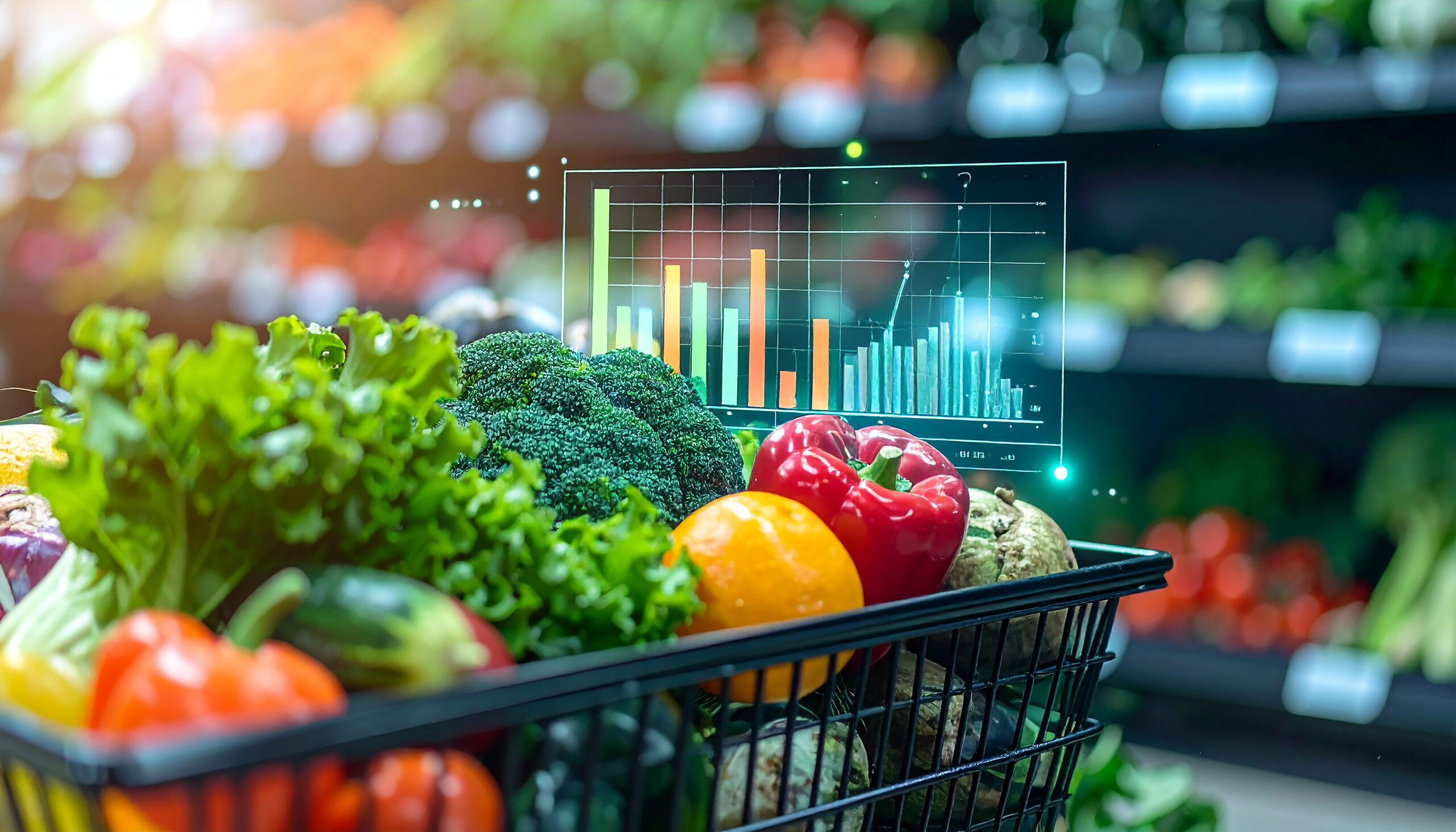
Execution Risk in the Cold Chain
Cold chain logistics introduces a second set of rules—and far less tolerance for mistakes. Mechanical delays in high-bay chillers or manual bottlenecks in refrigerated picking zones quickly translate into margin loss. Successful operators use automation to limit ambient exposure and segment frozen, refrigerated, and dry flows from one another.
Real-time diagnostics, buffer management, and tightly coupled WMS-WCS integration are critical to minimizing human error. Dynamic zoning tools can reassign product pathways in milliseconds based on temperature deviation alerts, reducing spoilage and regulatory exposure.
Smart design and execution transform grocery warehouses from cost centers into scalable, low-risk performance hubs.
Scalability Meets Strategy
Operational leaders are no longer judged solely on cost containment. They’re tasked with enabling new revenue models and downstream innovation. Facilities must support rapid seasonal scaling, SKU onboarding, and next-day delivery cutoffs within existing footprints. Automation is key to this flexibility. It allows operations to increase output without linear headcount or facility size increases.
Scalability, in this context, means predictable elasticity. Whether back-to-school rushes or weather-driven demand spikes for perishables, grocery fulfillment needs infrastructure that expands and contracts responsively. This includes pick-to-zero algorithms, robotic replenishment during night shifts, and multi-temperature ASRS configurations.
When planned as part of an enterprise strategy, warehouse operations serve as both the foundation and amplifier of digital transformation. The investment is justified not just by what it replaces but also by what it unlocks: deeper analytics, real-time orchestration, and future-proof adaptability.
Cost, Consolidation, and ROI
Warehouse automation delivers measurable ROI on multiple levels. Labor cost reductions of 25%–40% are typical when goods-to-person systems replace manual walking and reaching. Facilities often report a 20% increase in throughput without increasing their building footprint. For enterprise supply chain teams, that means fewer facilities overall, consolidated volumes, lower real estate costs, and less operational overhead.
These changes also accelerate return on capital. Automated systems reduce buffer inventory needs and allow more precise cycle counting, which frees up working capital and improves inventory accuracy. This enables tighter alignment between warehousing and merchandising strategy, especially when shelf life is limited and shrink rates carry reputational risks.
Technology Is Not Enough—Integration Is Everything
Even the best automation systems fall short without process alignment and systems cohesion. Cross-functional integration, between software, controls, and physical workflows, determines how well automation performs under pressure.
Integration also includes change management: onboarding teams, aligning KPIs, and evolving workflows based on live performance data. If teams aren’t trained to manage exception paths or if software lacks SKU-level logic for cross-zoned picking, systemic benefits collapse into a workaround culture.
When done right, integration delivers real-time agility, reduces disruption, and turns data into strategic insight. Predictive modeling becomes viable. SLA commitments become easier to meet. Staffing and maintenance can shift from reactive to proactive. In grocery, where timing is everything, those shifts differentiate between a missed truck and a satisfied customer.
Tech Stack & Systems Architecture: What Enables High-Performance Grocery Fulfillment
High-performance grocery operations rely on a tightly integrated tech stack that combines WMS, WCS, and ERP systems. These platforms must communicate in real time across temperature zones, item classes, and fulfillment modes. Sensor networks provide condition-based monitoring for temperature-sensitive goods, while ASRS modules coordinate with pick stations to reduce physical travel.
From autonomous mobile robots (AMRs) to high-speed shuttles, robotic subsystems are increasingly managed by middleware platforms that align mechanical activity with order priorities. Data lakes and analytics layers provide visualization for capacity planning, exception reporting, and SKU-level performance dashboards.
Critically, each layer of this stack must integrate with upstream forecasting tools and downstream transportation platforms to support a proper end-to-end grocery fulfillment strategy.
Ergonomics & Workforce Enablement
Warehouse operations in cold environments pose unique ergonomic risks. Automation reduces strain-heavy tasks such as overhead lifting, extended walking, and frequent reaching, particularly in refrigerated and frozen zones. This lowers injury rates and shortens training time, which is especially valuable in labor-constrained markets.
Human-centric workstation design improves posture and task repeatability, including tilt bins, lift tables, and adjustable pick-to-light zones. These enhancements aren’t only about compliance. They also support long-term retention, especially among aging workforces and multilingual teams.
Inclusive automation accommodates a wide range of physical abilities and language proficiencies through intuitive interfaces, color-coded workflows, and simplified decision trees. Facilities prioritizing these features see faster onboarding, fewer errors, and a more stable labor base.
Grocery Operations Are Being Rewritten in the Warehouse
Leaders in grocery logistics are building resilience, precision, and adaptability directly into their warehouse operations. From executive strategy to operational control, transformation depends on rethinking how work moves, not just how fast.
Those leading the field are not simply investing in automation or cold chain compliance. They’re building end-to-end fulfillment ecosystems where data, robotics, and human judgment converge around real-time orchestration.
The brands that lead in the next cycle of grocery innovation won’t be those with the most tech—they’ll be those with the most cohesive, human-aware operational design. As pressure mounts and competition tightens, warehouse operations remain the most decisive battlefield for grocery excellence. The smart money is moving accordingly.

0 Comments