


When you’re standing on a platform thirty feet above a concrete floor, “good enough” safety equipment isn’t part of the conversation. In industrial environments—whether it’s the sprawling maze of a refinery, the high-speed chaos of a warehouse, or the raw skeleton of a construction site—the margin for error is razor-thin. Fall protection isn’t just about checking a box for a regulator; it’s about making sure every person on that site goes home the same way they arrived.
Leading the charge in this space is Intrepid Industries, a powerhouse in manufacturing OSHA-compliant safety products. Their expertise spans everything from self-closing safety gates and toeboards to specialized safety hooks and custom-molded polyurethane components. By providing durable, high-quality protection solutions, they help facilities maintain strict compliance while significantly reducing the everyday risks that come with working at height.
The True Cost of a Fall
It’s easy to look at safety statistics as just numbers on a spreadsheet until you realize that falls remain the leading cause of fatalities in the construction industry and a top cause of non-fatal injuries across all industrial sectors.
Beyond the devastating human cost, the financial fallout for a company can be staggering. We’re talking about:
- OSHA Fines: Penalties for “Willful” or “Repeat” violations can exceed $160,000 per instance.
- Workers’ Comp: Insurance premiums skyrocket after a major incident.
- Legal Fees: Litigation can drag on for years, draining resources and reputation.
- Downtime: A single accident can shut down a site for investigation, halting production and destroying deadlines.
Investing in high-end fall protection isn’t an expense—it’s a massive hedge against a catastrophic loss.
Engineering the “Gap”: Why Gravity Matters
One of the most vulnerable spots in any facility is the ladder-access point or the floor opening. Historically, people used chains or bars to “close” these gaps. But humans are forgetful. A worker carrying tools might forget to hook a chain back, leaving an open invitation for a 20-foot tumble.
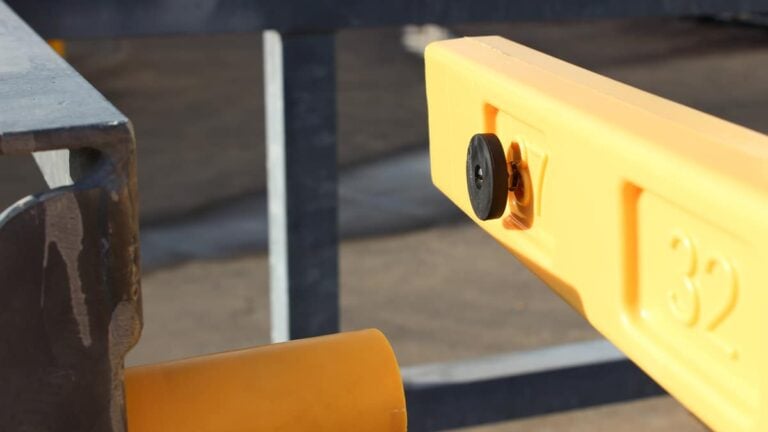
This is where the shift toward passive protection has changed the game. Using safety gates industrial setups—specifically those that rely on gravity rather than springs—removes the element of human error. If a gate relies on a spring, that spring can rust, lose tension, or snap. If it relies on gravity, it works every single time. It’s simple physics serving as a life-saving tool.
Beyond the Gate: The “Toeboard” Hero
We often focus so much on the person falling that we forget about the tools they carry. A wrench dropped from an elevated platform becomes a lethal projectile by the time it reaches the ground floor.
OSHA requires toeboards on platforms to prevent objects from being kicked off the edge. However, traditional metal toeboards can corrode or have sharp edges. Modern solutions, like those crafted from high-impact polyurethane, offer a few distinct advantages:
- Corrosion Resistance: Essential for chemical plants or offshore rigs where salt and moisture eat metal for breakfast.
- Color Permanence: Safety yellow isn’t just painted on; it’s molded in, meaning it won’t chip or fade over time.
- Flexibility: They can take a hit from a pallet jack and pop back into shape.
The Polyurethane Advantage in Harsh Environments
Why is there such a push toward custom-molded polyurethane components in industrial safety? If you’ve ever worked in a refinery or a coastal facility, you know that the environment is the enemy. Steel rusts, aluminum can spark, and wood rots.
Polyurethane acts as the “Goldilocks” material. It has the strength of metal but the resilience of rubber. It doesn’t spark, it doesn’t conduct electricity, and it is virtually impervious to the chemicals that typically melt other plastics. When Intrepid Industries designs safety hooks or gate components, they use these materials to ensure that the safety system doesn’t become a hazard itself due to degradation.
Creating a Culture of Compliance
Compliance shouldn’t be a “gotcha” game played by safety inspectors. It should be the baseline of your operations. To get there, facilities need to move from reactive safety (fixing things after an accident) to proactive engineering.
Conduct a “Walk-Down”
The best way to spot a fall hazard is to walk the floor with the eyes of a newcomer.
- Look for “swing” hazards near edges.
- Identify floor openings that are currently “protected” by a flimsy piece of plywood.
- Check if current gates actually close and latch on their own.
The Ease of Installation
A common excuse for skipping safety upgrades is the fear of downtime during installation. The beauty of modern, universal safety gates is that they often require no welding or specialized hot-work permits. Most can be bolted onto existing handrails in minutes using basic hand tools. This removes the barrier to entry for many facility managers who are juggling tight schedules.
Safety Hooks: The Unsung Protectors
Trip hazards are the cousins of fall hazards. In a busy construction site, hoses, cables, and cords are often snaked across the floor. Not only is this a trip risk for workers, but if a hose gets snagged by a vehicle, it can pull equipment down from higher levels.
Industrial safety hooks allow crews to get those lines off the floor and tucked neatly against railings or overhead supports. It’s a low-cost, high-impact way to clean up a workspace and prevent the “domino effect” of an accident.
The Future of Industrial Protection
As we move further into 2026, the technology behind these solutions continues to evolve. We are seeing more integration of “smart” safety features, but the core of fall protection remains physical barriers. A sensor can tell you if someone is near an edge, but only a rugged, OSHA-compliant gate can actually stop them from going over it.
The trend is leaning heavily toward maintenance-free materials. Facilities are tired of the “scrape, prime, paint” cycle required to keep metal safety yellow. The shift toward self-colored, molded materials is saving companies thousands in labor costs over the lifespan of the equipment.
Final Thoughts on Staying Grounded
At the end of the day, industrial safety is about respect—respect for the height, respect for the equipment, and respect for the lives of the people doing the work. Whether it’s outfitting a warehouse with better pedestrian boundaries or ensuring a refinery’s platforms are gated with gravity-closing systems, the goal is the same: zero incidents.
Working with experts who understand the nuances of OSHA standards and the harsh realities of industrial environments makes all the difference. When you choose solutions that are engineered for durability and simplicity, you aren’t just buying hardware; you’re buying peace of mind.

0 Comments